"What is Transition Catskills?" in a nice 8 minute film about New York States Transition Catskills group and can be viewed here: https://vimeo.com/116030075.
They also have an interesting webpage available here: http://www.transitioncatskills.org/
Thursday, April 30, 2015

Tuesday, April 21, 2015
Shall We Discuss Economic Growth?

Ignore if you must
climate change, biodiversity collapse, the depletion of water, soil, minerals,
oil; even if all these issues miraculously vanished, the mathematics of
compound growth make continuity impossible.
Economic growth is an
artefact of the use of fossil fuels.
As the volume of the
global economy expands, everywhere that contains something concentrated,
unusual, precious, will be sought out and exploited, its resources extracted
and dispersed, the world's diverse and differentiated marvels reduced to the
same grey stubble.
Efficiency solves
nothing while growth continues.
That's how you measure
the depth of this problem: by our inability even to discuss it.
Read the full article here:
http://www.theguardian.com/commentisfree/2014/may/27/if-we-cant-change-economic-system-our-number-is-up
What is Permaculture?
Some highlights from “Permaculture: the design arm of a
paradigm shift” by Toby Hemenway. Read the
full article here.
Much of the difficulty and confusion around permaculture
stems from its protean nature: It can be many things to many people. It’s been
called a philosophy, a movement, a design approach, a set of techniques, a
practice, a worldview, a land use ethic, a science, a pseudoscience, and even a
religion.
I’m finding that the most fruitful way for me to think about
permaculture is that it is the design arm of a paradigm shift. To be more
specific, it’s the design approach for achieving the goals of the
sustainability movement. And I mean sustainability in the largest sense, not
just environmental sustainability but social and ethical as well.
Permaculture is what we use to put into action our growing
understanding that humans must fit into the web-work of the rest of life or
we’ll make this planet uninhabitable for us and for countless other species. It
gives us tools for social justice and for working together.
Permaculture is a part—and an essential part—of those larger
sciences, philosophies, and social movements, but it’s not the whole story. It
doesn’t encompass them, it derives from them. And, most importantly,
permaculture gives us the tools we need to bring this new understanding of
whole systems into the world in physical form and action. Once we have learned
to think this new way, permaculture tells us what to do to make it real.
Permaculture, then, is a systematized program for enacting
the worldview of the social justice and sustainability movements and for
bringing the wisdom of indigenous knowledge into contemporary life. It is
whole-systems thinking in action. It’s what we need to do to be living in
alignment with the new paradigm, so nicely phrased by Rafter Sass Ferguson, of
meeting human needs while retaining and enhancing ecosystem health.
Knowing that permaculture is embedded in a larger movement
toward sustainability and in a whole-systems paradigm also constrains us from
doing stupid things with it. We won’t use permaculture to try to sustain the
unsustainable. Putting a green roof on a pesticide factory can’t be
permaculture design. Reducing waste or energy use at a toxics manufacturer
isn’t a viable design project because we know that we must take all the system
yields into account. A planet-killing process can’t be reformed; it must be
eliminated at a higher design level.
What function does permaculture perform in the world? And I
would answer that it gives us concrete methods to bring our new understanding
of whole systems into reality so that we can live regeneratively. It is the set
of tools that the social justice and sustainability movements can use to plan
and manifest their vision of a better world. Permaculture is the design arm of
the paradigm shift.
Saturday, February 28, 2015
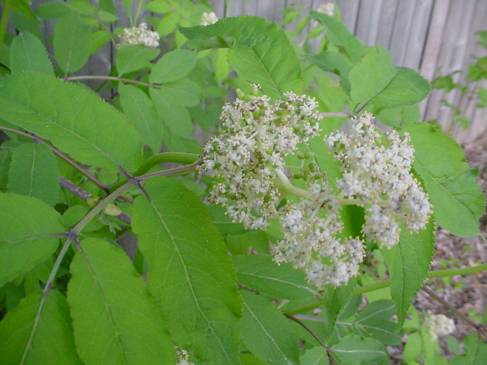
Anoka Conservation District Tree and Shrub Sale.
Wednesday, February 25, 2015
Hey there everyone!
Those who have met me at the meetings for Transitions North know me as Mark. Here on my Blogger I have the account name of Celestial Greens, a name speaking of the interconnectedness of the Universe above and the Nature below. I'm really excited to have met you all and i'm excited to see where we go as a group.
A lot of what i've learned over the years has led me to ask myself a lot of big questions. Is there a point towards living in any media that could be destroyed because of the loss of energy utilities? How will I really cope when the grid goes down? Am I really ready for when the Grid goes down? What does this mean for my Education over the next 5 years?
Over time i've come to one conclusion will all of the questions i've asked, there needs to be a sense of priorities with everything. I've always been an introspective person, and that being said, its important that I really try to make sense of what I know, and not overwhelm myself with senseless doomsday info that is just going to make me fall apart emotionally. It only seems practical for anyone who deals with this forhtcoming knowledge about the changing of society that we strategize towards the bettering of our own needs and the needs of others.
That being said, I want to learn about how to live better on my own. I need to know what it is I need to eat, I need to know how to clothe myself warmly, I need to be prepared to possibly survive in a place where there might not be food around me at every moment. I need to work towards skill sets of gardening, storage, and many other basic tasks that the everyday person has never even thought about for probably half of their lives. Now how does one do this, when really one might not have the chance to even go out and buy a prepping book that talks about different kinds of material that is useful? Well thats why I'm here.
Over the next 6 months or so, I plan to blog on my endeavors as I begin to learn tasks that are essential towards living off the land. I plan to post different pictures of the materials I am beginning to save up and different skills I will be teaching myself. I want to share this with you all, as I know that even if some of what i'm learning is stuff you might have learned, it might be good for those who don't know as much to have a chance to learn this in a time where finding information can be an extreme challenge when there is so much, and so little time.
I don't know if I will ever be prepared enough, I don't know if any of this will be helpful to any of you all, regardless I just want others to know, its ok to not know. As long as we all do our part and work towards something, we will move towards a better life.
Celeste

Those who have met me at the meetings for Transitions North know me as Mark. Here on my Blogger I have the account name of Celestial Greens, a name speaking of the interconnectedness of the Universe above and the Nature below. I'm really excited to have met you all and i'm excited to see where we go as a group.
A lot of what i've learned over the years has led me to ask myself a lot of big questions. Is there a point towards living in any media that could be destroyed because of the loss of energy utilities? How will I really cope when the grid goes down? Am I really ready for when the Grid goes down? What does this mean for my Education over the next 5 years?
Over time i've come to one conclusion will all of the questions i've asked, there needs to be a sense of priorities with everything. I've always been an introspective person, and that being said, its important that I really try to make sense of what I know, and not overwhelm myself with senseless doomsday info that is just going to make me fall apart emotionally. It only seems practical for anyone who deals with this forhtcoming knowledge about the changing of society that we strategize towards the bettering of our own needs and the needs of others.
That being said, I want to learn about how to live better on my own. I need to know what it is I need to eat, I need to know how to clothe myself warmly, I need to be prepared to possibly survive in a place where there might not be food around me at every moment. I need to work towards skill sets of gardening, storage, and many other basic tasks that the everyday person has never even thought about for probably half of their lives. Now how does one do this, when really one might not have the chance to even go out and buy a prepping book that talks about different kinds of material that is useful? Well thats why I'm here.
Over the next 6 months or so, I plan to blog on my endeavors as I begin to learn tasks that are essential towards living off the land. I plan to post different pictures of the materials I am beginning to save up and different skills I will be teaching myself. I want to share this with you all, as I know that even if some of what i'm learning is stuff you might have learned, it might be good for those who don't know as much to have a chance to learn this in a time where finding information can be an extreme challenge when there is so much, and so little time.
I don't know if I will ever be prepared enough, I don't know if any of this will be helpful to any of you all, regardless I just want others to know, its ok to not know. As long as we all do our part and work towards something, we will move towards a better life.
Celeste
Monday, February 23, 2015
Egalitarian Thoughts
Following up on some of our discussions tonight, here are
some links to a couple of papers on egalitarian thoughts from some anthropologists
that have spent a good portion of their life’s living with and studying people
who practice the life. Unfortunately,
finding folks that are still free to live this freestyle life is becoming more
and more difficult as commercialization dominates the world.
James Woodburn, “Egalitarian Societies” available here: http://cas.umkc.edu/econ/economics/faculty/Forstater/688/Reading/Egalitarian%20societies.pdf
Christopher Boehm and others, “Egalitarian Behavior and
Reverse Dominance Hierarchy available here: http://www.unl.edu/rhames/courses/current/readings/boehm.pdf
And for a more radical take on the topic visit the Radical
Anthropology Group website here: http://radicalanthropologygroup.org/
A talk that I found interesting from this group titled “Woman’s
Biggest Husband is the Moon” can be found here:
http://radicalanthropologygroup.org/av/video/womans-biggest-husband-moon-how-hunter-gatherers-maintain-social-equality
Friday, February 20, 2015
Whitney's Action Monday Notes 2/17/2015
Tom, Bob, Mary, Nathan, Emily, Zack, Steve, Shawn
- Began discussion about Agile methods of project completion. Our very own Steve happens to have a lot of experience using Agile to complete different projects and has volunteered to give a short presentation on the subject during our next WAM* session.
For more information Bob provided a link to the Agile Manifesto. Replace the word, "software," with, "system," for a less occupationally specific version. - Looking for members willing to submit a picture (preferably of your self) and a short biographical blurb about why you and Transition are a, "thing," now.
These will be printed at some point before the Green Expo to be pinned proudly to the board that Bob has assembled for that very purpose. - The Second Annual Planting Party will be held at a slightly more appropriate time of the season this year. The date is still up in the air but It will definitely happen in April and definitely after the 9th. If there are any more things that should added to that list, ... definitely let us know.
- *Thanks to Emily we can now efficiently refer to these meetings simply as WAM.
- Briefly discussed a CSA. In the spirit of Agile Methods Emily suggested we start small and provide a CSA to people just within our own little Transition community.
- Nathan volunteered to design and deliver a form of sorts. It is intended to help us gather and organize a list of abilities, tools and equipment that we'd be willing to share with the group.
- Nathan (I think) also suggested we engineer a convenient way for people to drop off excesses of useful things. This could be used as a way for members to swap various items.
Whitney and I would like to volunteer our garage as soon as we get a chance to give it several good once-overs. Other volunteers and suggestions are welcome. - Plant sharing was discussed and well received. And for the record, Steve has a lot of comfrey to share.
- Mary mentioned that she wanted to build a solar dehydrator and the entire group mentioned that we would like very much to help her do it. If the meeting had been in Nathan or Zack's garage I'm sure the excitement would have had us build one on the spot.
For the next WAM session we hope to have gathered plans and a few materials that could go into building a few solar dehydrators.
The Piepers (Nathan and Emily) volunteered their garage for a Solar Dehydrator Build Day once we have everything we need. - The season for Maple Syrup harvesting is almost here. Bob has already found some additional spiles to use and Steve's description of a maple syrup cooking party sounds pretty enjoyable.
- Nathan suggested we put together a spring foraging event. He will be scouting out some good areas to search. If you have a favorite foraging spot of your own please tell us about it.
- The Piepers also discussed hosting a fruit tree pruning event. Stay tuned...even though the technology you're using to read has no tuner to speak of.
- Steven mentioned setting up a class on fruit tree grafting which seems to be required knowledge if we want to propagate a particular type of fruit tree reliably.
- Finally there was discussion about having different members give short, edifying presentations on things they're passionate about. If you're interested we can easily make room for your presentation during pretty much any meeting.
Thanks to all that showed and all that show interest. Thanks to the rest of you too. Seriously.
The links below were recently posted to the Transition North Twin Cities Facebook page and related to this meeting...
Bob Found: http://en.wikipedia.org/wiki/Spile
Tom Found: http://farmhack.net/tools
From Zack: Thinking more about some tools our Action Team can use to make decisions as the need arises, the SWOT analysis comes to mind. It's a simple tool that can be used to help build consensus on ideas. So, when we come to a point where we must choose between courses of action, we can perform a SWOT on each choice.
The links below were recently posted to the Transition North Twin Cities Facebook page and related to this meeting...
Bob Found: http://en.wikipedia.org/wiki/Spile
Tom Found: http://farmhack.net/tools
From Zack: Thinking more about some tools our Action Team can use to make decisions as the need arises, the SWOT analysis comes to mind. It's a simple tool that can be used to help build consensus on ideas. So, when we come to a point where we must choose between courses of action, we can perform a SWOT on each choice.
The hope is that by laying out the idea in this way, the option that makes the most sense will become more clear.
And because we are advocating for and against ideas without voting, we are building support for one idea or another rather than leaving the simple minority in the dust.
Shawn
Subscribe to:
Posts (Atom)